Interior refurbishment for homes in Kent
A refurbishment is more than a coat of paint. Old wallpaper and tired finishes come off, cracks and damaged plaster are made good, and the room is finished again from the bare surfaces up. A-Z Decorators carries out interior refurbishments for homes across Kent, and our team brings more than 30 years in the trade to every one.
We take on single rooms, whole floors and houses that have been empty for a while. A refurbishment often follows a house move or building work, or comes before a property is sold or let. Whatever the reason, the aim is the same. When we leave, the room is finished, clean and ready to furnish.
Every job starts with a free, no-obligation quotation. We look at the rooms with you, talk through what you have in mind, and set out the materials, labour and time frame in writing so you can compare it with any other price you are given.
What a refurbishment with us includes
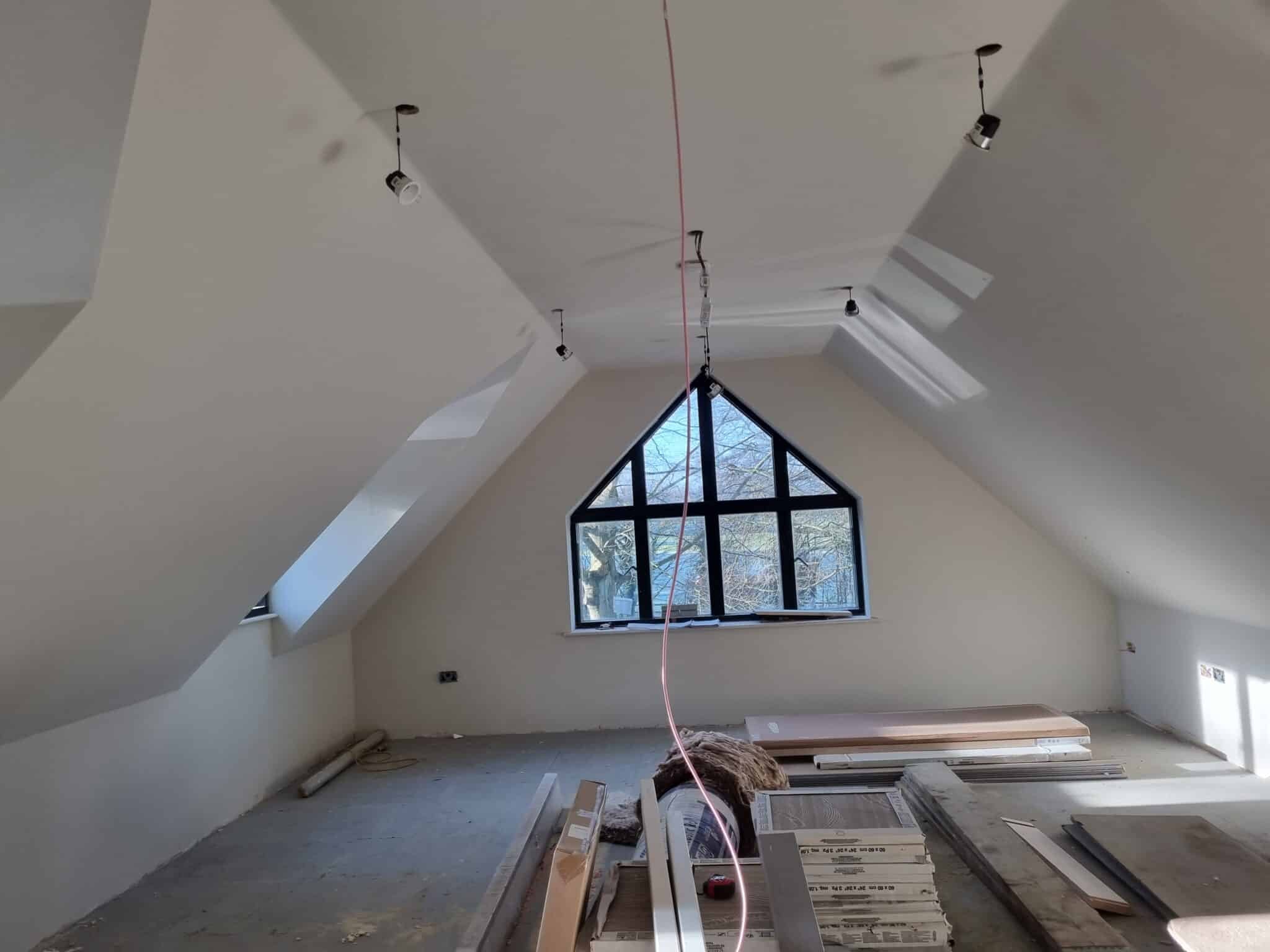
Most refurbishments begin with stripping out. We take off old wallpaper, scrape back flaking paint and remove finishes that are past saving, which our guide on stripping wallpaper before redecorating covers step by step. That is when the state of the walls underneath becomes clear.
Next comes making good. Cracks, holes left by old fixings, chipped corners and dents in the plaster are filled and sanded flat, so the new finish has a sound base. Our post on whether decorators can fix cracks and wall imperfections explains what can be repaired at this stage and what needs a plasterer.
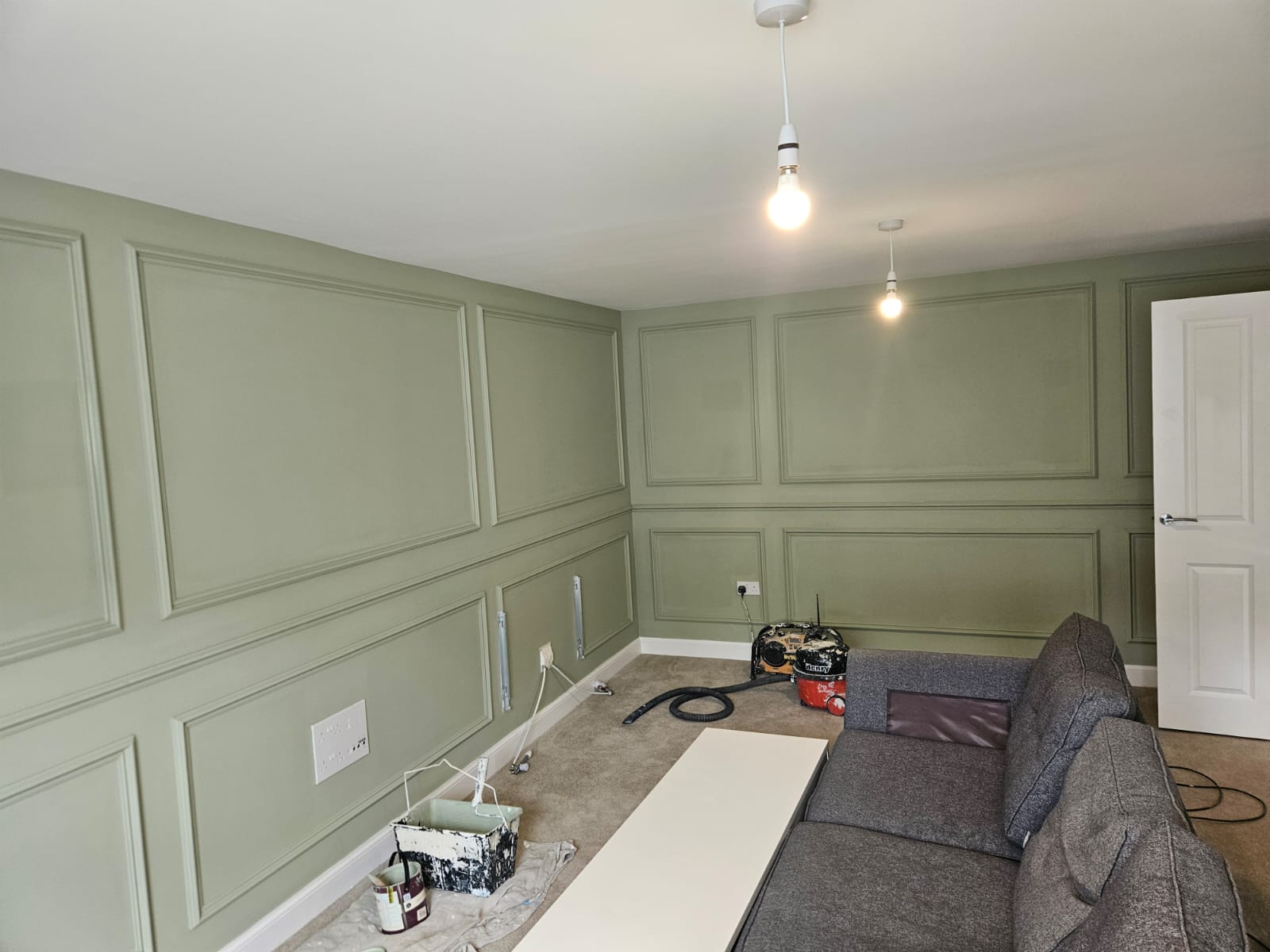
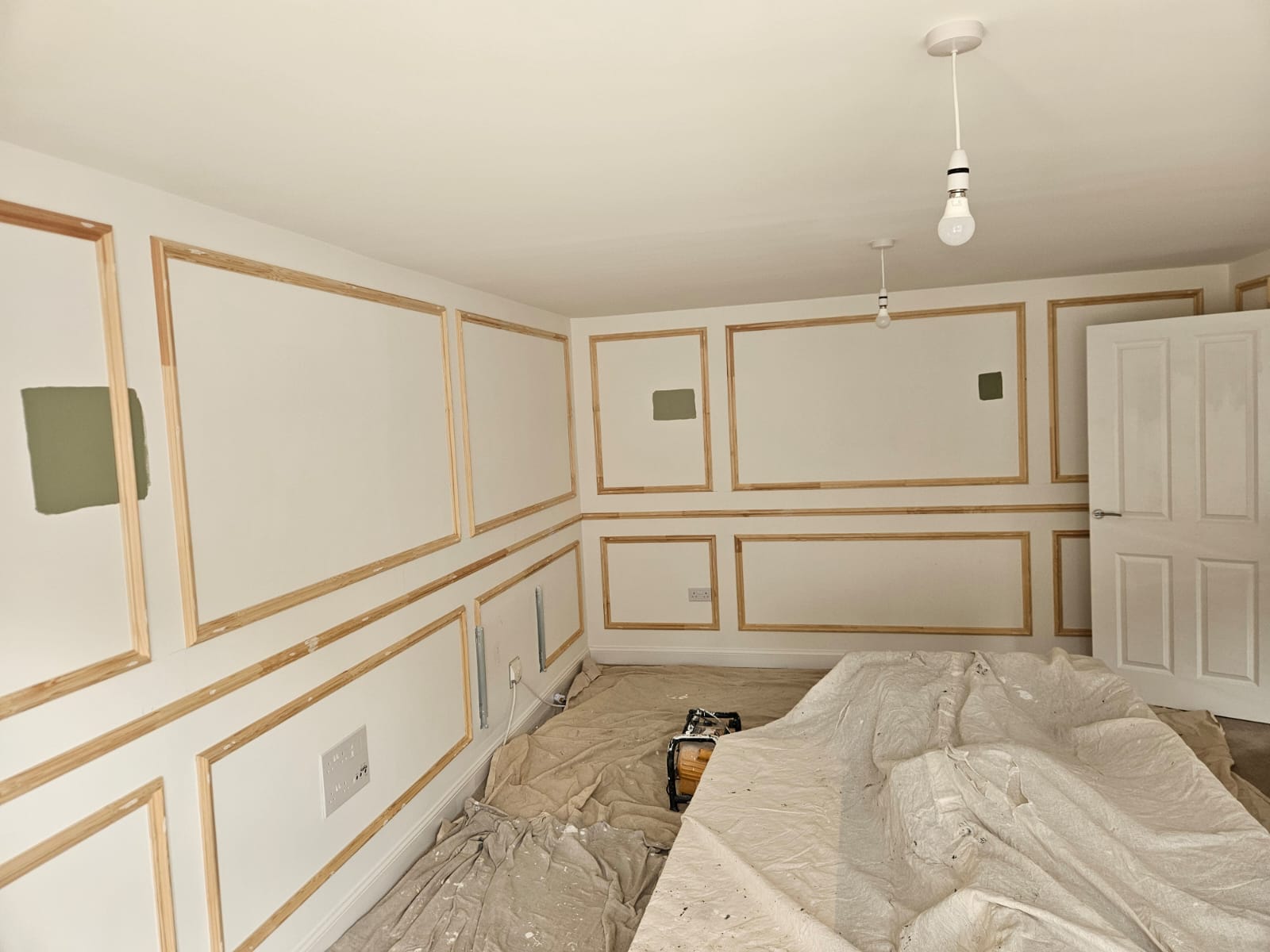
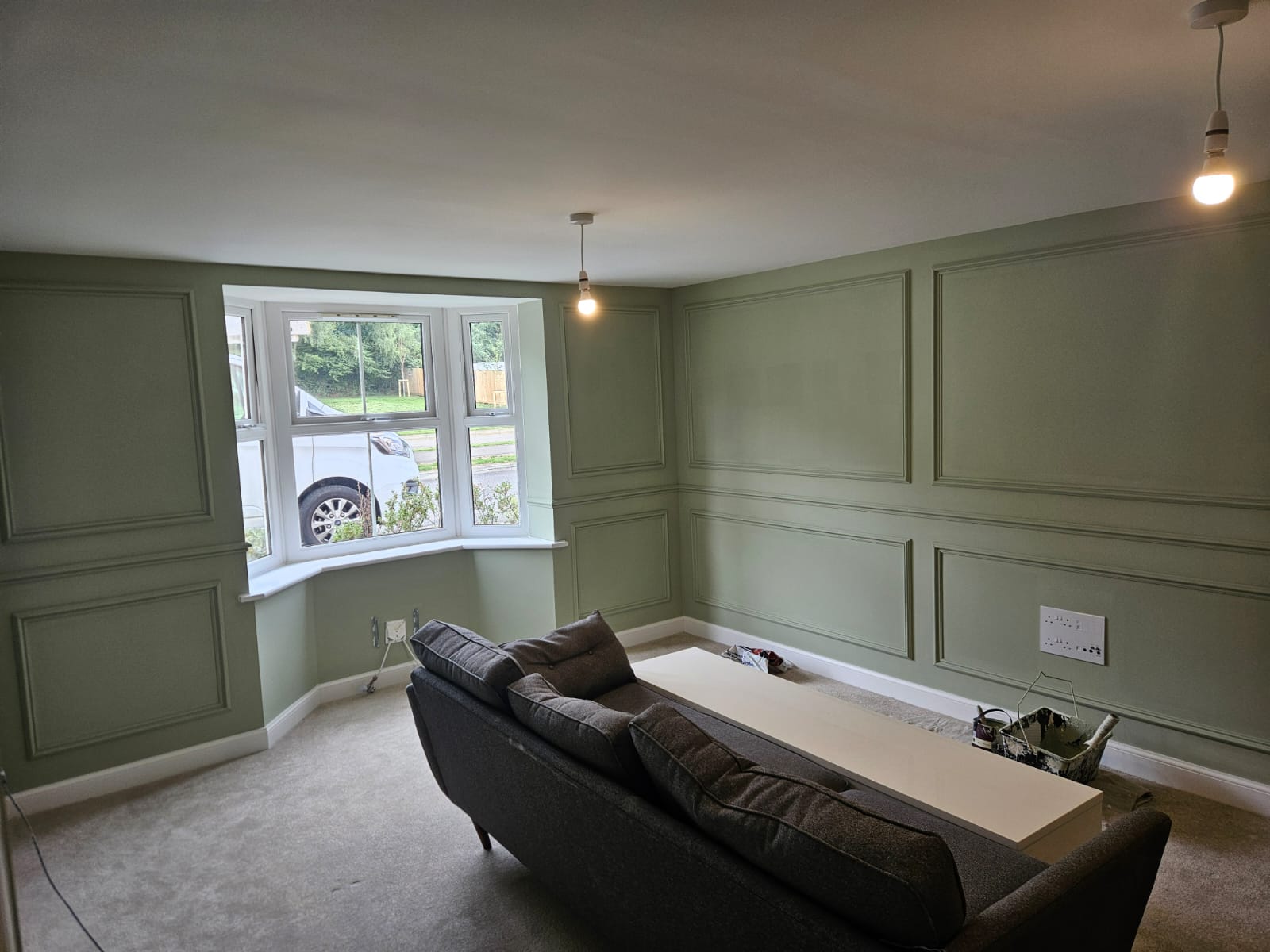
Then the finishing work starts, and this is where a refurbishment brings several of our services together in one job. Depending on the room, that can mean interior painting of walls, ceilings and woodwork, wallpapering, wall and floor tiling in kitchens, bathrooms and hallways, new coving where the ceiling meets the wall, and painted fitted furniture such as wardrobes and alcove units. Wall panelling, like the sage green living room in the photos, is a popular way to give a plain room more character.
Larger jobs are planned in stages, so the house stays usable and the rooms you need most are finished first. Our post on whether decorators can handle large projects covers how that works on a bigger job.
What can we provide?
We have been providing painting and decorating services throughout the local area for years.
Planning an interior refurbishment
A refurbishment touches more of the house than redecorating does, so a little planning at the start saves time and money later.
Older houses and what is behind the walls
Stripping out an older room sometimes turns up materials that need care. The Health and Safety Executive's introduction to asbestos says that buildings put up after 2000 are unlikely to contain it, and that people working on buildings from before then are more likely to come across it. Textured ceiling and wall coatings, often known by the trade name Artex, are one of the places HSE lists in its guide to where asbestos is found. If a coating in a pre-2000 house needs to come off, it should be tested first.
Old paint is the other thing to check. The British Coatings Federation says lead pigments were removed from most decorative paints in the early 1960s, but some paint supplied up until the 1990s may still contain lead, so old layers of gloss on doors and skirting are not something to sand back without thinking.
Listed homes need more care again. Historic England's advice on redecorating historic homes is that if a home is listed or in a conservation area you should seek advice before making changes, as consent may be required, and that original features such as wall panelling, plaster cornices, picture rails and timber mouldings are valuable and would need consent to take out.
Electrics, plumbing and building regulations
Some work that often goes with a refurbishment is controlled by the Building Regulations. GOV.UK's guide to when you need building regulations approval lists replacing a fuse box and the electrics connected to it, installing a bathroom that involves plumbing, changing electrics near a bath or shower, replacing windows and doors, and adding radiators to a heating system among the alterations that may need it. You do not need to get approval yourself if the installer is registered with a competent person scheme, because they can certify the work. Without approval, GOV.UK warns, you will not have the certificates of compliance you may need when you come to sell your home.
GOV.UK's guide to building work, replacements and repairs lists the competent person schemes for each kind of work. Gas work must be done by an engineer on the Gas Safe Register.
On a refurbishment we work alongside your electrician, plumber or builder, and the quotation makes clear which parts of the job need one.
Party walls and chimney breasts
Opening up a terraced or semi-detached house can reach the wall it shares with next door. The Party Wall etc. Act 1996 covers work to an existing party wall, and GOV.UK gives cutting into a party wall and removing chimney breasts from one as examples. Before work like that, the owner must give the neighbours notice in the way the Act sets out, so it belongs at the very start of the plan, well before any decorating is booked.
Clearing the rubbish from a strip-out
A strip-out produces a lot of waste, from old wallpaper and plaster to carpets and fitted units. By law the householder has a duty of care for it. GOV.UK's guidance on the household waste duty of care explains that you must take reasonable steps to hand it only to someone authorised to take it, and that if it is fly-tipped and traced back to you, the council can fine you up to £600. Whoever removes it, check their registration on the Environment Agency's register of waste carriers first and keep a note of it.
Choosing finishes that last
A refurbished room should look right for years, so the finish matters as much as the colour. Living rooms and bedrooms suit a durable matt on the walls, which hides small marks in the plaster and can still be wiped clean, as our post on the best paint finish for a living room explains. Hallways and stairs take far more knocks, so they need the toughest wall paint you are happy with the look of.
Kitchens and bathrooms deal with steam, grease and regular cleaning. A finish with a little more sheen copes better there, and our guide to which paint finish is best for kitchens compares the options. Woodwork such as doors, skirting and panelling usually gets a hard-wearing satin or gloss, and the choice between water-based and oil-based paint is one we talk through at the quotation, because water-based whites stay white for longer and oil-based ones tend to yellow.
Timing the decorating
Decorating is the last trade in, and it pays to give it room in the plan. New plaster has to dry out before it takes paint, and fresh paint needs time to harden before furniture goes back against it, which our guide to how long paint takes to dry in the UK goes into.
Getting a quotation
You can see finished rooms, and some halfway through, in our gallery, and everything else we take on is listed on our services page. We cover the whole county, including Sevenoaks, West Malling and Barming. To arrange your free quotation, contact us by phone, email or WhatsApp, or see what customers say about A-Z Decorators on Google.