Why Is My Paint Cracking Or Flaking?
Paint cracks or flakes when the film can no longer hold on to the surface beneath it, or can no longer move with it. In most cases the cause sits under the paint rather than in it. Moisture getting behind the film, a surface that was dirty, glossy or powdery when it was painted, a paint that does not suit the wall, timber or plaster that moves, and old paint that has simply reached the end of its life are the usual culprits.
The fix is the same in every case. Find the cause and deal with it, scrape the loose paint back to a firm edge, prepare and prime the bare patches, then repaint. Rolling fresh paint over flaking paint never works, because the new coat is only as well stuck as the old one underneath it. This guide explains how to read what your paint is telling you and what to do about each cause.
Cracking, flaking and blistering are different problems
It helps to know which one you are looking at, because each points to a different cause.
- Fine cracking or crazing. A web of small cracks in the paint itself, often on a ceiling or a textured wall. It usually comes from paint put on too thickly, a coat applied before the one underneath had dried, or a sudden drop in temperature while water based paint was drying.
- Flaking and peeling. The paint lifts at the edges and comes away in flakes or strips. This is a loss of grip, and moisture or poor preparation is nearly always behind it.
- Blistering. Bubbles in the paint that may burst and flake. Trapped moisture, or heat drawing air and resin out of timber, pushes the film away from the surface.
- Cracks in the wall. A crack running through the plaster, with the paint simply following it. That is a plaster or movement problem, not a paint problem, and it needs filling before any paint will hide it.
If you are looking at the last of these, our guide on whether professional decorators can fix cracks and wall imperfections covers it in detail. The rest of this article deals with paint that is failing in its own right.
Moisture behind the paint
Damp is the single most common reason paint lets go. Dulux puts flaking and blistering down to moisture trapped beneath the surface of the paint film, and the trade advice from Dulux Trade on flakes, cracks and blisters says the same for exterior masonry and wood alike.
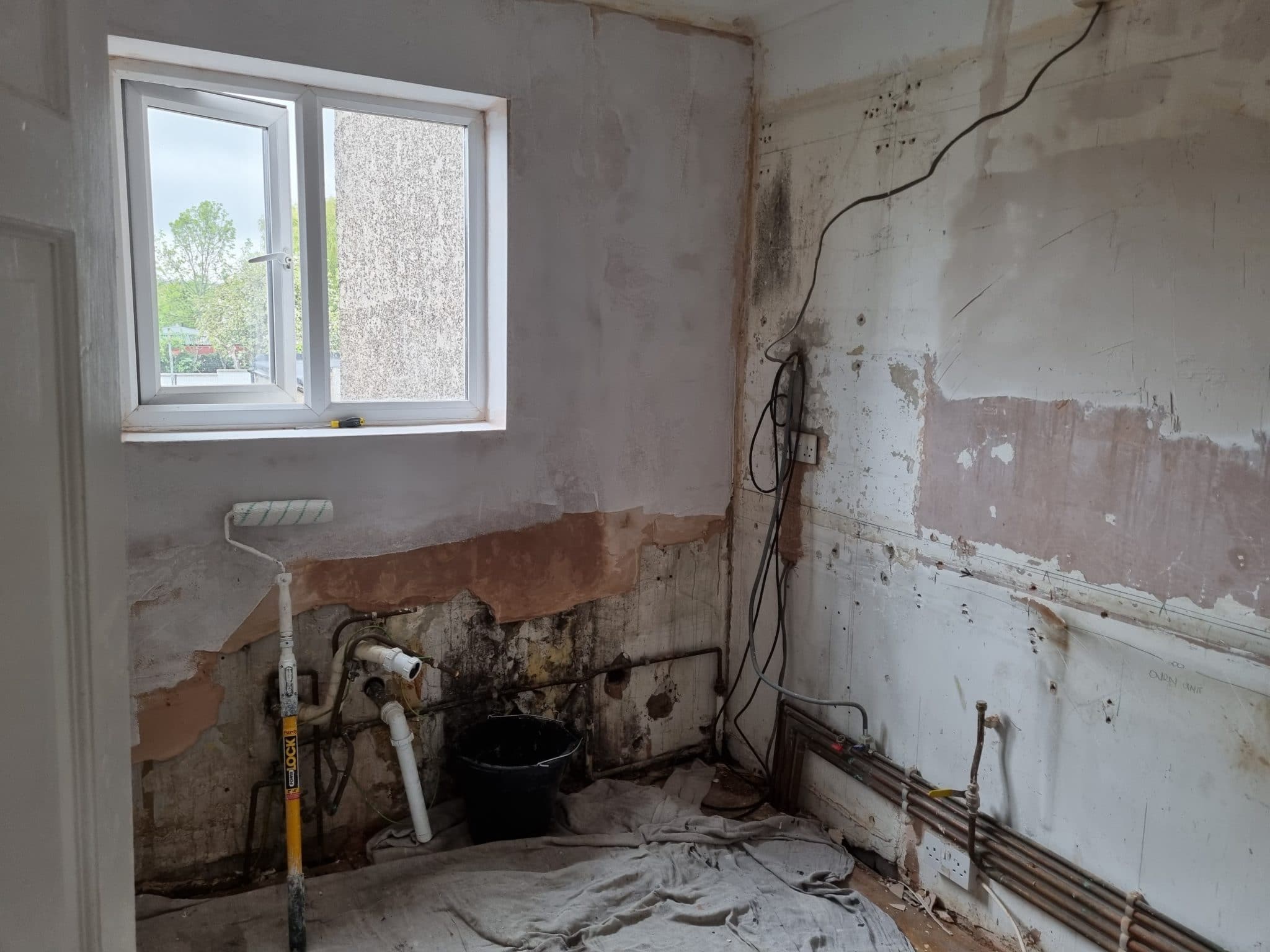
Outside, the water usually comes from a fault you can see once you look for it. A leaking gutter or downpipe, a cracked sill, failed sealant around a window frame, or rain finding its way into the end grain of a board. Inside, it tends to be condensation in bathrooms and kitchens, a leak from a pipe or roof, or damp in a solid wall. Paint over a damp patch and it will flake again, however good the paint.
This is the point where spending money on decorating is the wrong move. If a wall is wet, the leak, the gutter or the damp needs sorting first, and for rising or penetrating damp that means a roofer, a plumber or a damp specialist rather than a decorator. Once the source is fixed and the wall has dried out, the decorating will last. Where the problem is condensation and mould in a bathroom, the steps in our guide on getting rid of mould before painting a bathroom apply before any paint goes on.
Poor preparation underneath
Paint can only grip what it is put on. If that surface was dusty, greasy, chalky or shiny, the new coat sits on top of the problem rather than bonding to the wall or the wood.
A few situations come up again and again. Emulsion rolled straight over old gloss or eggshell will often blister and peel, and Dulux Trade names this as a common cause of blistering in rooms with a lot of condensation. Paint over varnish chips easily, because varnish is a hard film that new paint struggles to grip. On exterior walls, old masonry paint that has gone powdery leaves a chalky layer that the next coat sticks to instead of the wall. Dulux's advice for that is to brush it down hard and use a stabilising primer before repainting.
Proper preparation fixes all of these. That means washing down, sanding a key into anything shiny, removing loose and powdery material, and using the right primer for the surface. Our guides on how to prepare walls for painting and why surface preparation matters go through the steps, and if you are wondering whether a sound old finish can simply be painted over, read can you paint over old paint.
Movement in timber and new plaster
Paint is a thin skin. If the surface underneath moves more than the skin can stretch, it splits.
Timber moves with the seasons as it takes on and loses moisture. Dulux Trade points to the joints in window frames as a typical place for paint to split, and to resin from knots, which can blister dark colours on south facing woodwork. Its advice is to fill open joints with a flexible exterior filler and seal knots with knotting solution before priming. Gaps between frames, skirting and walls are better filled with a flexible decorators caulk than with a rigid filler, and our article on painting over decorators caulk explains how to get paint to sit on it.
Plaster moves too. Small cracks often appear as a new house or a newly plastered wall dries out, and in older houses as the building settles. Dulux Trade treats these as normal and advises cutting them out, filling and sanding before spot priming. New plaster painted too soon is a separate trap, because the moisture still in it pushes the paint off. Our guide on how long to wait before painting new plaster covers the waiting time and the mist coat.
The wrong paint on an older wall
Many older houses, in Kent as everywhere, have solid walls finished in lime plaster or lime render, which were built to let moisture pass through and dry out. Modern vinyl emulsions and many masonry paints form a much tighter film. On a wall that needs to breathe, that film can trap moisture behind it, and the paint blisters and peels.
Writing about historic interiors, the conservation architect Mark Parsons lists blistering and peeling paint among the typical results of walls being sealed with modern finishes, and makes the point that a new paint system must not trap moisture where the wall itself is breathable. He also notes that limewash cannot go over modern non porous paints, so changing to a breathable finish usually means removing the old one first.
If your house is old and the paint keeps failing in the same places, the paint itself may be the problem. We go into breathable finishes for older walls on our painting services page, and it is worth getting the wall looked at before buying more of the same tin.
Age, sun and weather outside
Even well applied exterior paint does not last forever. Sun breaks down the film, rain and frost work at any weak spot, and in time the paint either chalks, cracks or loses its grip. Homes near the sea have a harder time again, which our article on exterior painting for coastal homes in Kent looks at.
The weather on the day matters as much as the weather afterwards. Water based paint caught by a sudden drop in temperature while drying can crack, and Dulux Trade lists this alongside thick, unthinned coats as a cause of what it calls mud cracking. That is why exterior painting is planned around the forecast, and why our guide on whether you can paint outside in winter recommends waiting for the right conditions rather than rushing a job into the cold.
What flaking weatherboarding looks like
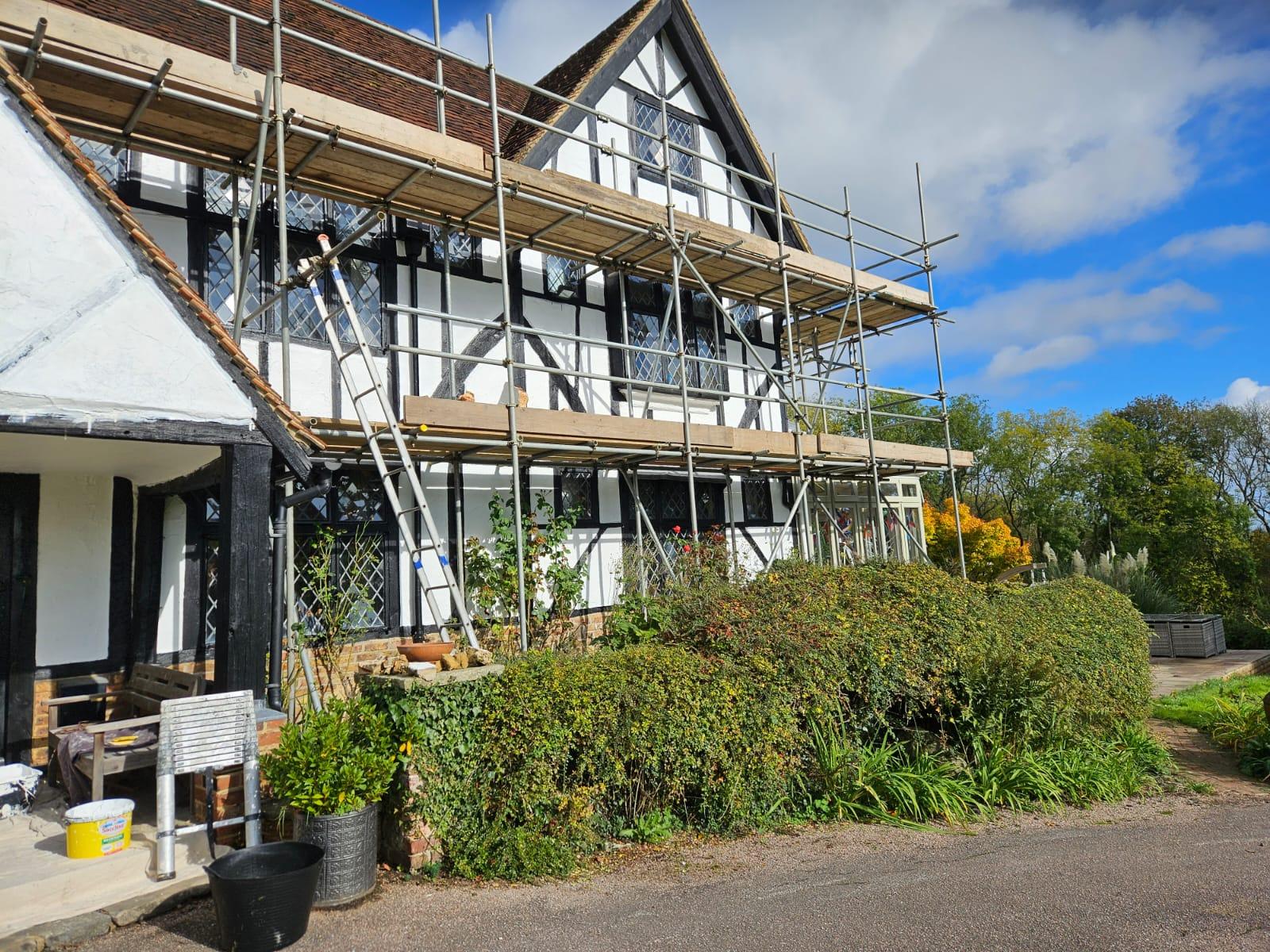
The photo at the top of this page was taken from the scaffold on one of our own exterior jobs. The paint on the weatherboarding has let go along the lower edges of the boards and around the corner trim, and in several places you can see bare timber that has weathered to grey. There is green growth on the boards to the left as well.
Grey timber matters. Dulux Trade lists paint over grey, weathered wood as a cause of failure on exterior timber, so the right approach is to sand those areas back to sound wood before anything else goes on. Painting straight over what is in that photo would have looked fine for a season and then flaked again along the same lines. You can see more of our exterior work, weatherboarding included, in our gallery.
How to fix cracking and flaking paint properly
Once the cause is dealt with, the repair follows the same pattern whatever the surface. The steps below follow Dulux Trade's advice for exterior masonry, exterior wood and interior plaster.
- Scrape away every bit of loose or poorly stuck paint, back to a firm edge.
- Sand the edges of the remaining paint so they feather into the bare patches and do not show through the new coat.
- Clean the surface and let it dry thoroughly. Treat any mould or algae first.
- Fill cracks and open joints, using a flexible filler where the surface moves.
- Prime the bare areas with a primer suited to the surface, and seal knots in timber.
- Apply the finish coats in suitable weather and at the thickness the tin states.
Where the failure is widespread, patching is false economy. Dulux Trade's advice is to strip the paint completely, and on a whole elevation of flaking weatherboarding or a ceiling that is crazed from edge to edge, that is usually the quicker route to a finish that lasts. Our guide to stopping stains coming through paint covers the primers to use where an old leak has left marks behind.
Take care with old paint in older houses
Flaking paint in an older home may contain lead. The Health and Safety Executive mentions properties built before the 1980s in its frequently asked questions on lead, and advises stripping old paint back only when it is flaking, chipping or a risk to children. The jobs it names as the most risky are dry sanding old paint and stripping it with blow lamps or gas torches. For paint in poor condition, it describes using a chemical paint stripper, wet abrasive paper and on tool extraction, then bagging up all the debris.
If you suspect lead, especially with young children or someone pregnant in the house, leave dry scraping and sanding alone and get the work done by someone with the right equipment.
When to call in a decorator
A small patch of flaking paint on a skirting board or a window sill is a reasonable job to tackle yourself with a scraper, sandpaper and the right primer. It is worth getting a professional in when the paint keeps failing in the same place, when large areas are affected, when the work is at height on the outside of the house, or when there is a chance of old lead paint.
We have been painting and decorating homes across Kent for more than 30 years. Our exterior decorating and interior decorating pages explain how we work, and our quotations are free and set out the materials, labour and time frame.
Get your paintwork looked at
Cracking and flaking paint is a symptom, and the lasting fix starts with the cause. If you would like someone to look at failing paintwork on your home, contact us and A-Z Decorators will arrange a free, no obligation quotation.