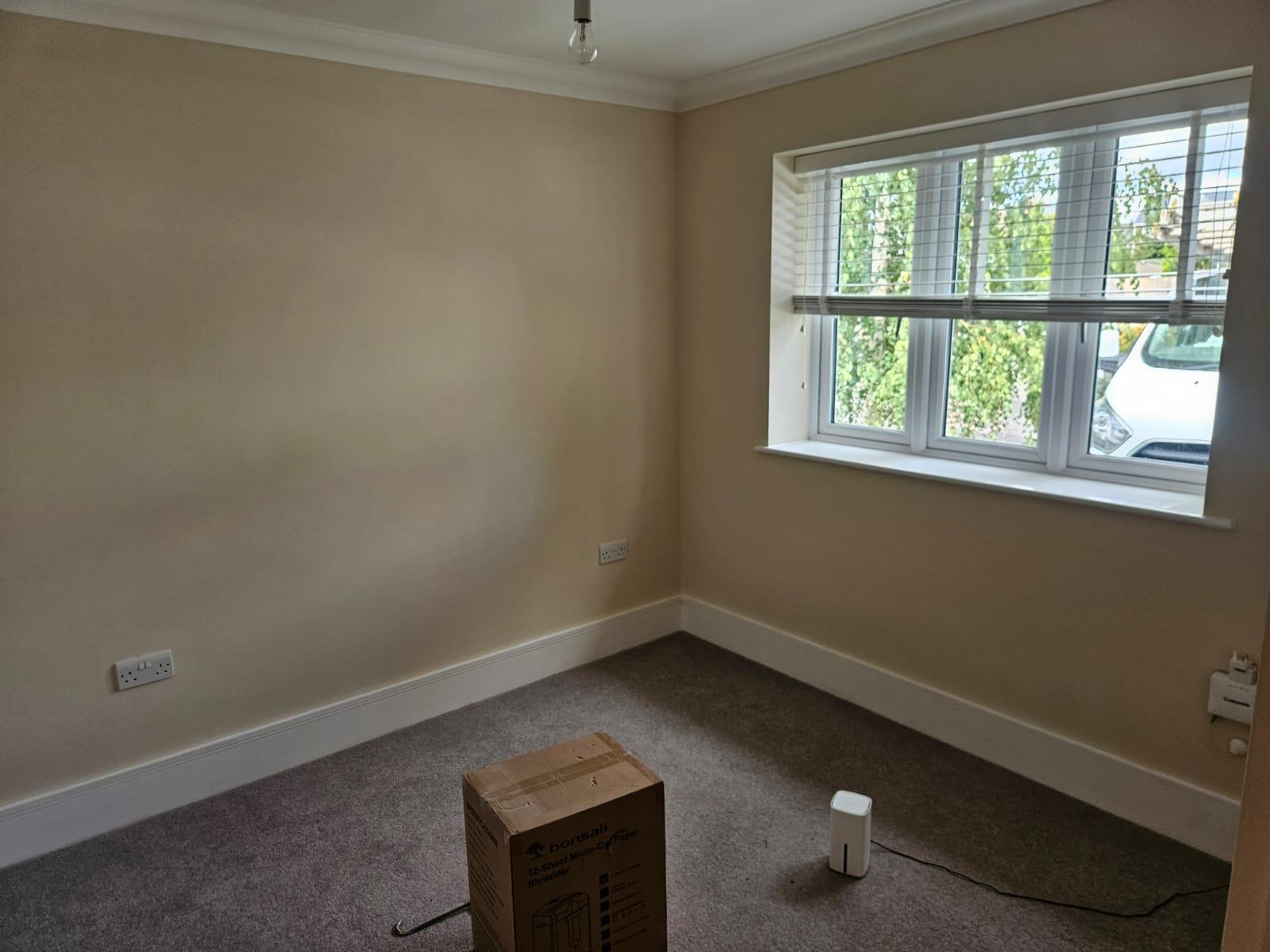
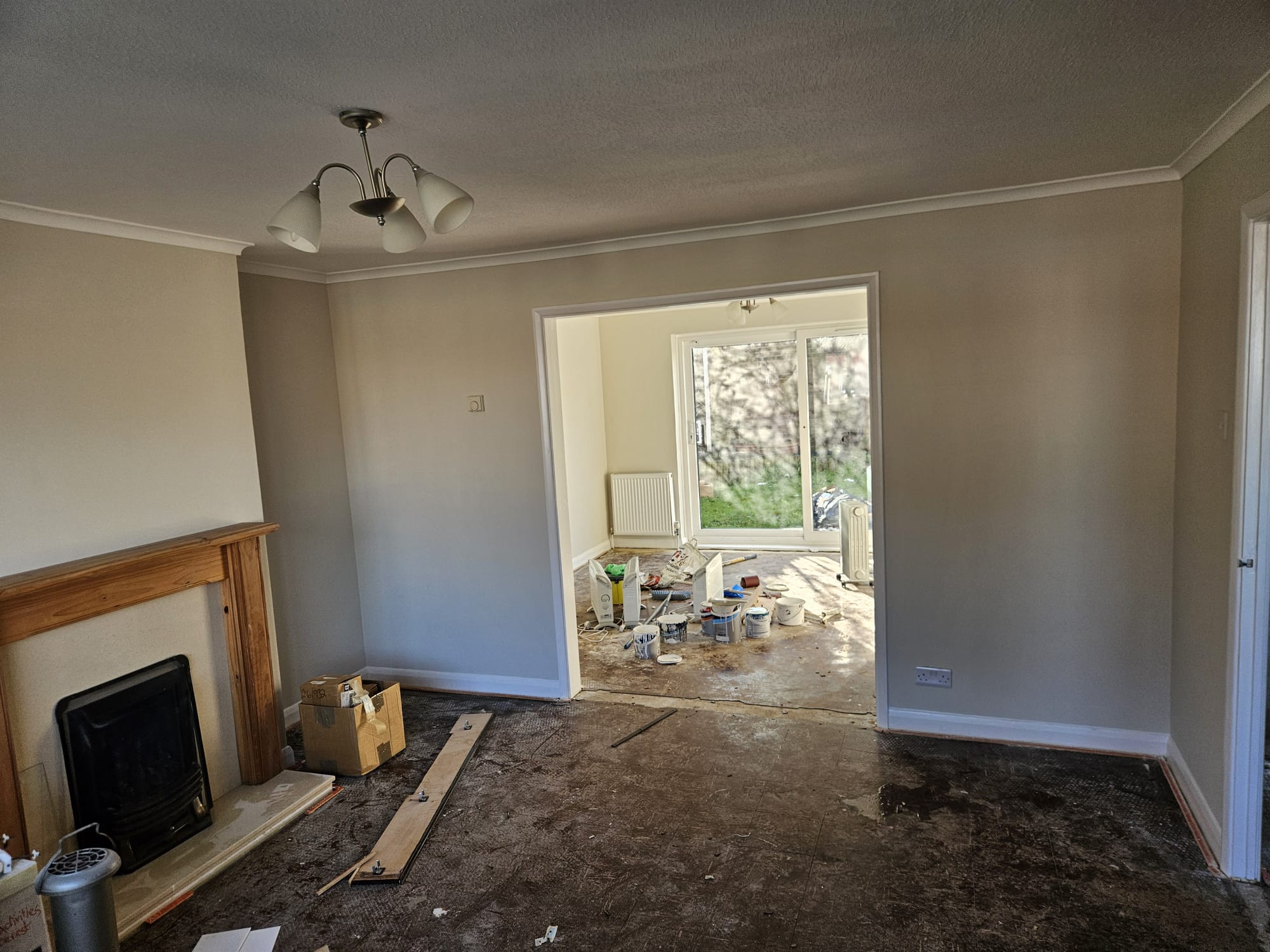
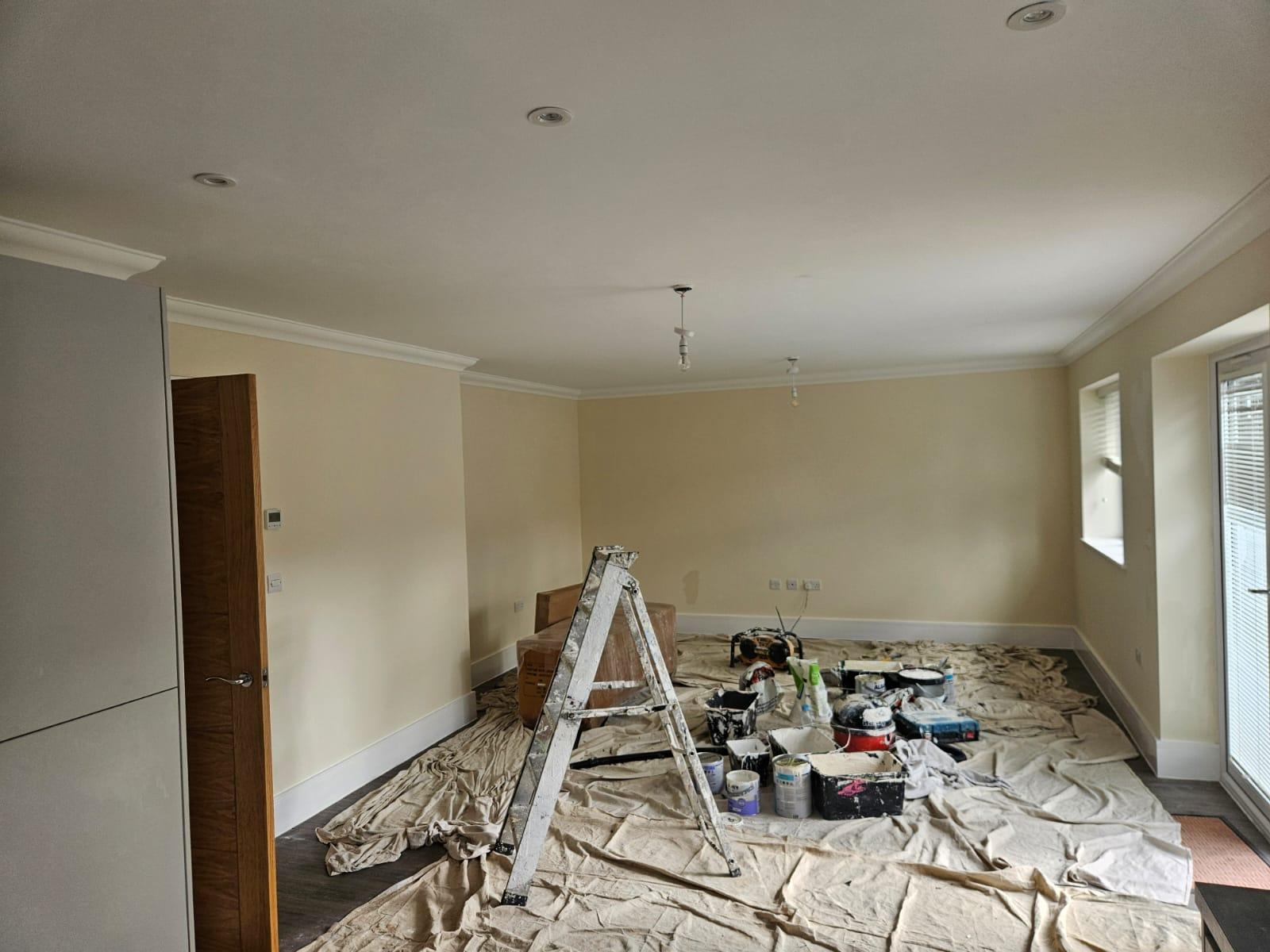
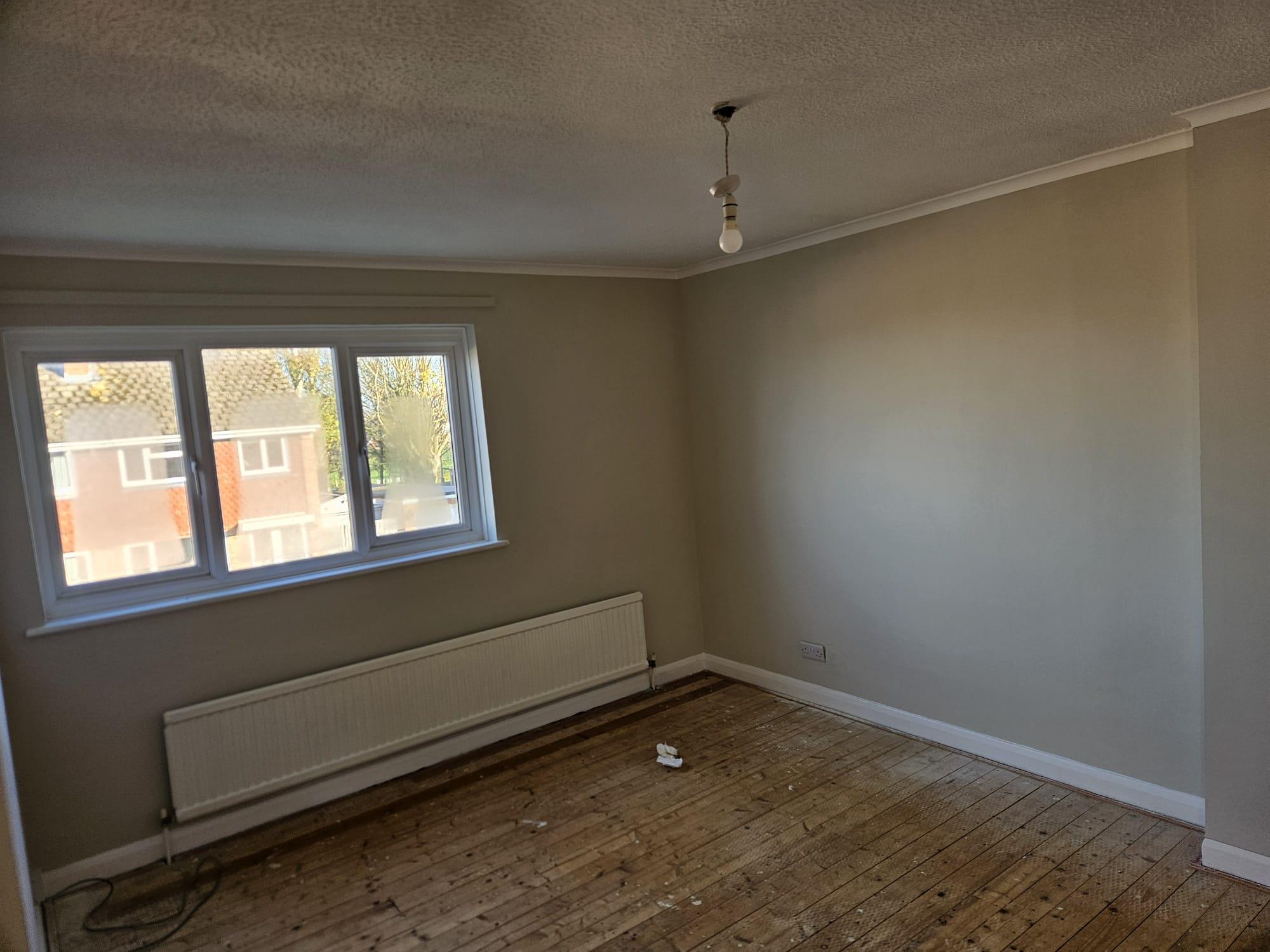
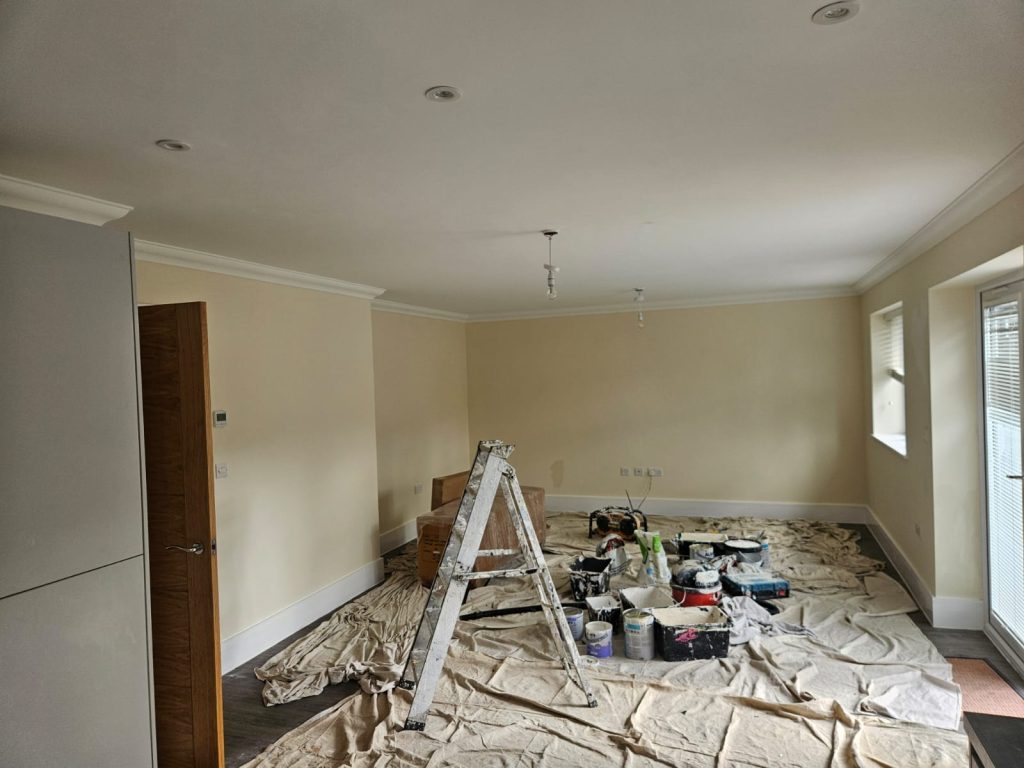
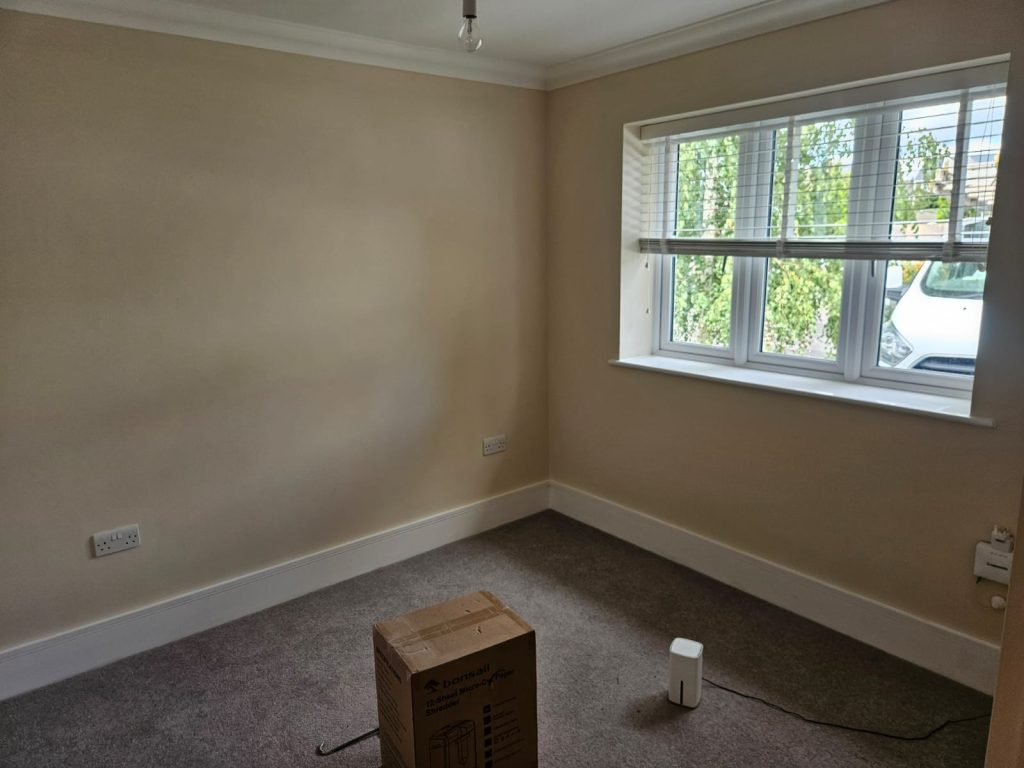
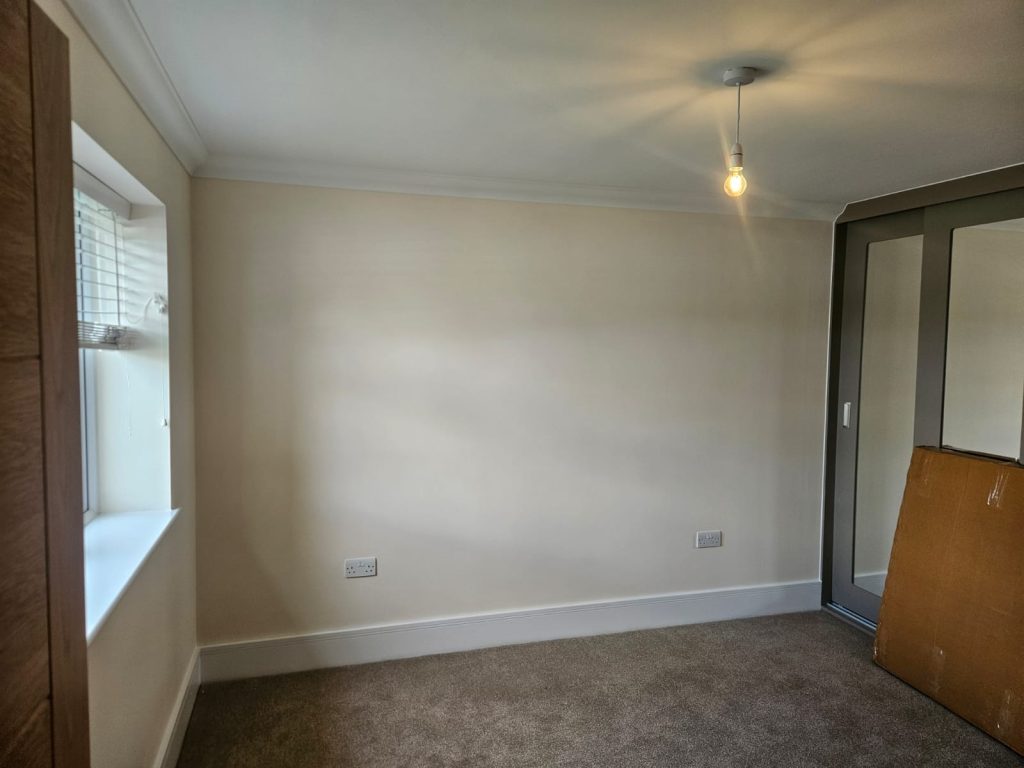
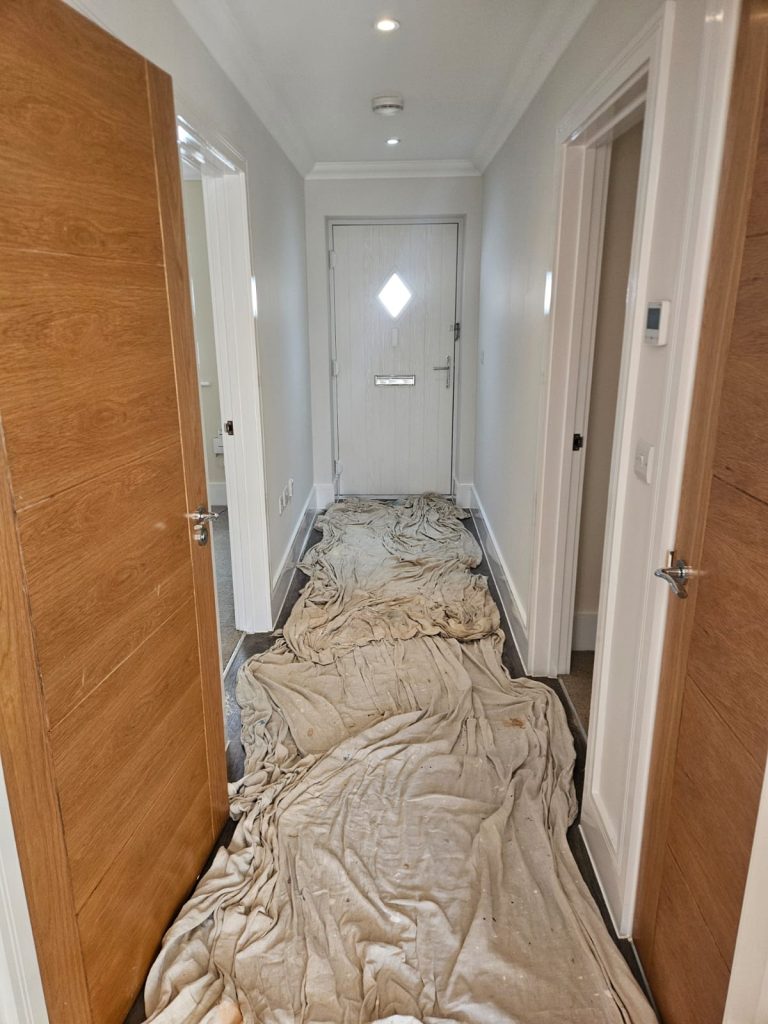
Coving fitted and finished in homes across Kent
Coving is the curved moulding that runs around a room where the walls meet the ceiling. A-Z Decorators fits new coving, replaces lengths that are cracked or damaged, and fills and paints existing coving in homes throughout Kent. Our team has more than 30 years in the trade, and coving is usually part of a wider redecoration, so the ceiling, walls and woodwork can be finished at the same time.
Coving does a practical job as well as a decorative one. The joint between wall and ceiling is where hairline cracks most often appear, because the two surfaces move slightly differently as the house warms, cools and settles. A length of coving covers that joint and gives a clean, straight line around the top of the room, which also hides small differences in the height of the ceiling.
Every job starts with a free, no-obligation quotation. We look at the room, talk through the profile and size of coving that suits it, and set out the materials, labour and time frame in writing.
How we fit and finish coving
Good coving starts with a sound surface. Loose paint, flaking plaster and old adhesive are scraped back along the top of the walls and the edge of the ceiling, so the new lengths bond to something solid. The line is then marked out right round the room, because walls and ceilings are rarely perfectly square and the coving has to look straight even where the room is not.
Corners are where coving is judged. Internal and external corners are cut as mitres, and in older rooms they often need adjusting by eye to close up neatly. The lengths are fixed with coving adhesive, with temporary support for heavier plaster lengths while it sets, and the joints between lengths are filled so the run reads as one continuous moulding.
Once it is fixed, the gaps along the top and bottom edges are filled with decorators' caulk, which stays slightly flexible and stops fine cracks opening up later. Our post on whether you can paint over decorators' caulk explains how to get a clean painted finish over it. New plaster coving is porous, so it is sealed before the finishing coats go on, usually at the same time as the ceiling. Our guide to painting a ceiling without marks covers the order and the technique.
What can we provide?
We have been providing painting and decorating services throughout the local area for years.
Coving in older and newer homes
Every room is different, and the age of the house makes a difference to what is behind the coving and what should go up.
Choosing a profile and material
Coving comes in many profiles, from a plain quarter-round curve to stepped and more detailed designs, and in different depths. A deeper profile suits a tall room and a slimmer one suits a modern room with a lower ceiling. Plaster coving gives a crisp, solid finish and takes paint well. Lighter materials such as polystyrene are cheaper and easier to put up, but they dent easily and look less sharp up close.
Period homes and original cornices
Many older houses in Kent still have their original plaster cornices, which are often more detailed than modern coving. Historic England's advice on redecorating historic homes is that original features such as plaster cornices and picture rails are valuable, that you would need consent to take them out of a listed building, and that some ornamental plasterwork may need specialist treatment. If your home is listed or in a conservation area, it is worth checking before any changes are made. Where a cornice is sound, careful cleaning, filling and repainting is often all it needs.
Textured ceilings and asbestos
Fitting coving means drilling, scraping and fixing along the edge of the ceiling, and some older ceilings have a textured coating. The Health and Safety Executive's guide to where asbestos is found lists textured decorative coatings, often sold under trade names such as Artex, as one of the materials that can contain it. HSE's introduction to asbestos says buildings put up after 2000 are unlikely to contain asbestos, so in an older house with a textured ceiling we check before any work disturbs it.
Cracks along the ceiling line
If you have a crack running along the top of a wall, coving is often the neatest answer, though it should not be used to hide movement that is still going on. Our post on whether decorators can fix cracks and wall imperfections explains which cracks are cosmetic and which need looking at first.
Repairing and repainting existing coving
Coving that is already up rarely needs replacing in full. Open joints between lengths and cracks along the top edge can be raked out, filled and caulked, and a short damaged section can be cut out and a new length matched in, as long as the same profile is still made. Coving that has been painted many times can lose its crisp edges, and a careful rub down before repainting brings back some of that detail. Repainted at the same time as the ceiling, it finishes the room off with a clean white line.
Arranging your quotation
You can see more finished rooms in our gallery. Coving often goes up during interior decorating or a wider interior refurbishment, and everything else we offer is on our services page. We work across the county, including Maidstone, Aylesford and Sevenoaks. To book your free quotation, contact us by phone, email or WhatsApp, or read reviews of A-Z Decorators on Google.